Dissent from Darwin
There is a scientific dissent from Darwinism and it deserves to be heard.
Home
There Is Scientific Dissent From Darwinism
It deserves to be heard.
We are skeptical of claims for the ability of random mutation and natural selection to account for the complexity of life. Careful examination of the evidence for Darwinian theory should be encouraged.
Did you know that a growing number of scientists doubt the Darwinian theory of evolution?
About
During recent decades, new scientific evidence from many scientific disciplines such as cosmology, physics, biology, “artificial intelligence” research, and others have caused scientists to begin questioning Darwinism’s central tenet of natural selection and studying the evidence supporting it in greater detail.
Yet public TV programs, educational policy statements, and science textbooks have asserted that Darwin’s theory of evolution fully explains the complexity of living things. The public has been assured that all known evidence supports Darwinism and that virtually every scientist in the world believes the theory to be true.
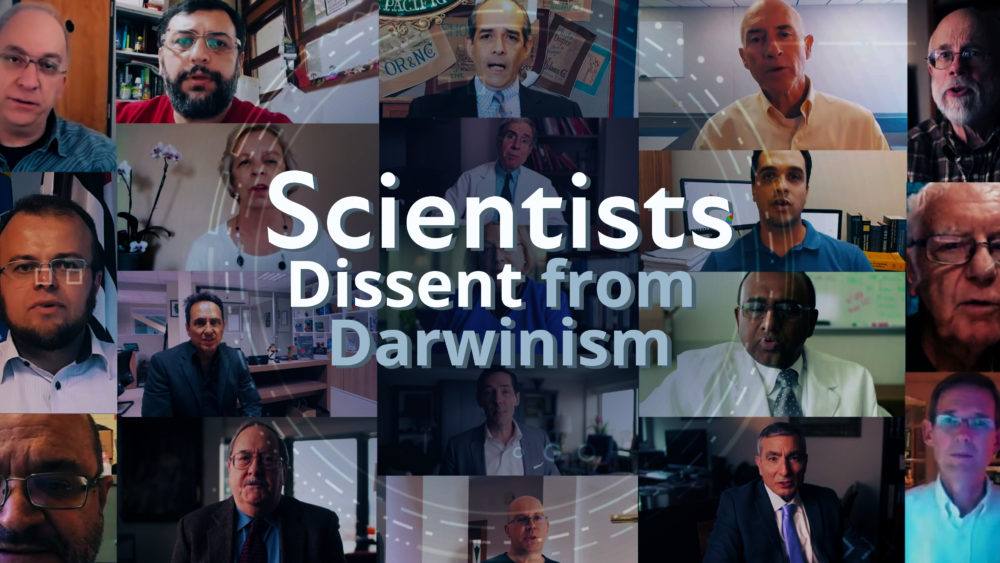
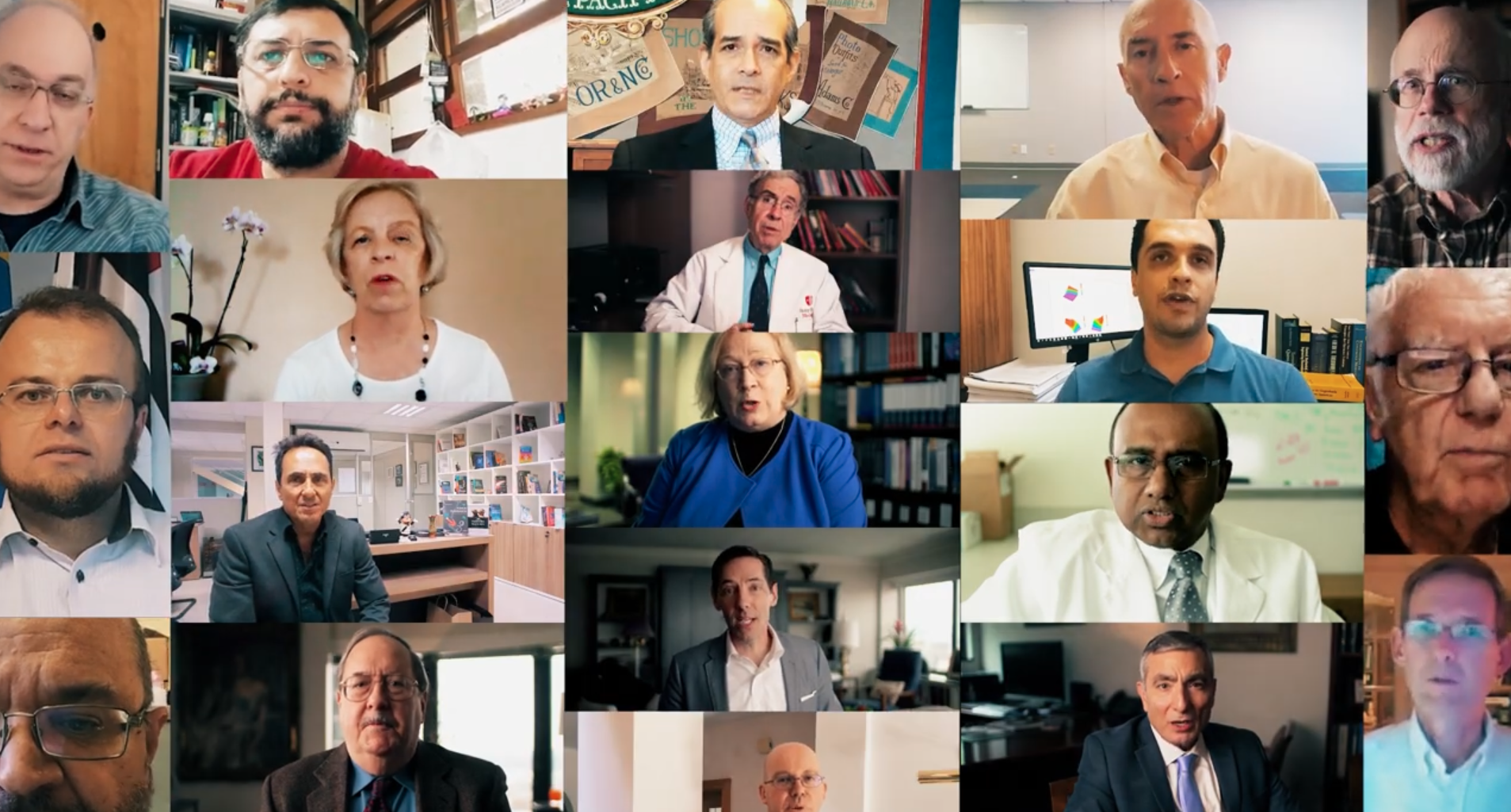
The scientists on this list dispute the first claim and stand as living testimony in contradiction to the second. Since Discovery Institute launched this list in 2001, more than a thousand scientists have courageously stepped forward to sign their names.
The list is growing and includes scientists from the US National Academy of Sciences, Russian, Hungarian and Czech National Academies, as well as from universities such as Yale, Princeton, Stanford, MIT, UC Berkeley, UCLA, and others.
A Scientific Dissent From Darwinism
We are skeptical of claims for the ability of random mutation and natural selection to account for the complexity of life. Careful examination of the evidence for Darwinian theory should be encouraged.
There is scientific dissent from Darwinism. It deserves to be heard.
Resources
Resources for Students
Many students visit this website because they were referred here by a science class, perhaps by a teacher, a textbook, or an online curriculum. The articles linked below provide background information for students about the Scientific Dissent from Darwinism list, including information about how we should teach evolution in schools, and answers to common objections to the “Dissent From Darwinism” list.
- Why Is Darwinian Evolution Controversial?
- Is Darwinian Evolution “Just a Theory”
- Answering Objections to the Dissent from Darwinism List
- How Should We Teach Evolution?
Get Started Here
The arguments that ultimately unravel the Darwinian synthesis aren’t terribly difficult to grasp. Anyone who remembers the rudiments of logic they learned in freshman composition can follow the essentials of the argument. Below is an article to get started:
The Top Ten Scientific Problems with Biological and Chemical Evolution
Frequently Asked Questions
1. What is the Scientific Dissent From Darwinism statement?
The Scientific Dissent From Darwinism is a short public statement by scientists expressing their skepticism of Neo-Darwinism’s key claim that natural selection acting on random mutations is the primary mechanism for the development of the complexity of life. The full statement reads: “We are skeptical of claims for the ability of random mutation and natural selection to account for the complexity of life. Careful examination of the evidence for Darwinian theory should be encouraged.” Prominent scientists who have signed the statement include evolutionary biologist and textbook author Dr. Stanley Salthe; quantum chemist Henry Schaefer at the University of Georgia; U.S. National Academy of Sciences member Philip Skell; American Association for the Advancement of Science Fellow Lyle Jensen; Russian Academy of Natural Sciences embryologist Lev Beloussov; and geneticist Giuseppe Sermonti, Editor Emeritus of Rivista di Biologia / Biology Forum and discoverer of genetic recombination in antibiotic-producing Penicillium and Streptomyces.
2. When and why was the statement created?
The statement was drafted and circulated by Discovery Institute in 2001 in response to widespread claims that no credible scientists existed who doubted Neo-Darwinism. Discovery Institute subsequently took out an ad in The New York Review of Books and elsewhere showcasing over 100 scientists who were willing to publicly express their scientific skepticism of Neo-Darwinism. Since 2001 the signatories of the statement have grown to over 1,000 scientists, both in the United States and around the world.
3. Who is eligible to sign the statement?
Signatories of the Scientific Dissent From Darwinism must either hold a Ph.D. in a scientific field such as biology, chemistry, mathematics, engineering, computer science, or one of the other natural sciences; or they must hold an M.D. and serve as a professor of medicine. Signatories must also agree with the following statement: “We are skeptical of claims for the ability of random mutation and natural selection to account for the complexity of life. Careful examination of the evidence for Darwinian theory should be encouraged.” If you meet these criteria, please consider signing the statement by emailing contact@dissentfromdarwin.org.
4. Why is it necessary to have such a statement?
In recent years there has been a concerted effort on the part of some supporters of modern Darwinian theory to deny the existence of scientific critics of Neo-Darwinism and to discourage open discussion of the scientific evidence for and against Neo-Darwinism. The Scientific Dissent From Darwinism statement exists to correct the public record by showing that there are scientists who support an open examination of the evidence relating to modern Darwinian theory and who question whether Neo-Darwinism can satisfactorily explain the complexity and diversity of the natural world.
5. By signing the Scientific Dissent From Darwinism, are signatories endorsing alternative theories such as self-organization, structuralism, or intelligent design?
No. By signing the statement, scientists are simply agreeing with the statement as written. Signing the statement does not indicate agreement or disagreement with any other scientific theory. It does indicate skepticism about modern Darwinian theory’s central claim that natural selection acting on random mutations is the driving force behind the complexity of life. Signing the statement also indicates support for the careful examination of the evidence for Darwinian theory.
6. Is the Scientific Dissent From Darwinism a political statement?
No. It is a professional statement by scientists about their assessment of the scientific evidence relating to Neo-Darwinism and an affirmation of the need for careful examination of the evidence for modern Darwinian theory.
7. Are there credible scientists who doubt Neo-Darwinism?
Yes. Signatories of the Scientific Dissent From Darwinism hold doctorates in biological sciences, physics, chemistry, mathematics, medicine, computer science, and related disciplines from such institutions as Oxford, Cambridge, Harvard, Dartmouth, Rutgers, University of Chicago, Stanford and University of California at Berkeley. Many are also professors or researchers at major universities and research institutions such as Cambridge, Princeton, MIT, UCLA, University of Pennsylvania, University of Georgia, Tulane, Moscow State University, Chitose Institute of Science & Technology in Japan, and Ben-Gurion University in Israel.
Contact
A Scientific Dissent from Darwinism and the dissentfromdarwin.org website are projects of Discovery Institute’s Center for Science & Culture and are copyright © Discovery Institute.
If you have any questions you can email us or see below for further contact details.
Seattle Headquarters:
Discovery Institute
506 2nd Ave, Ste 1700
Seattle, WA 98104
Phone: (206) 292-0401